
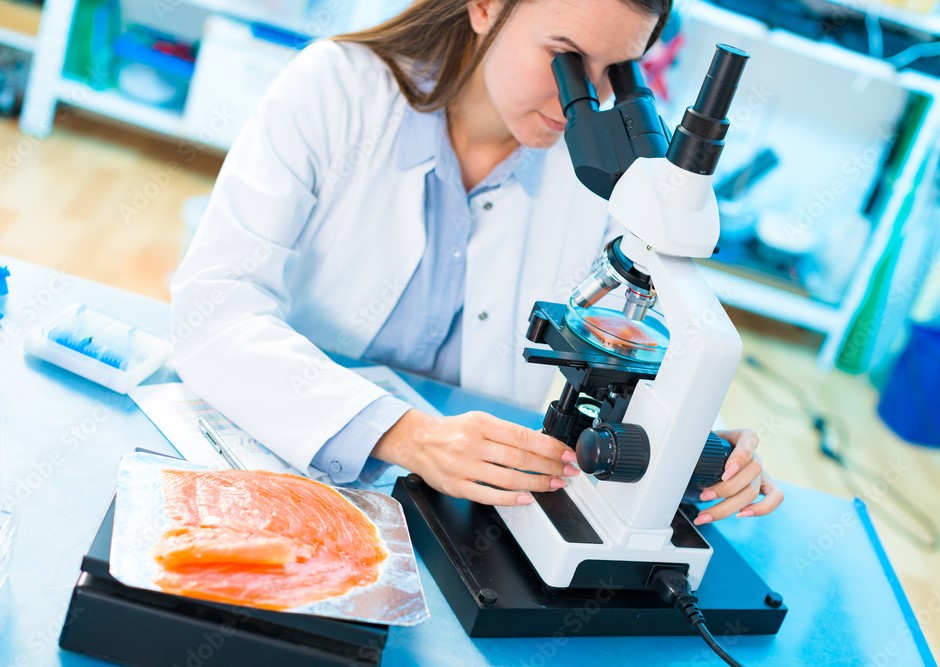
SATT Nord announces the signing of an exclusive license agreement for FreshFish technology with the PFI Nouvelles Vagues innovation platform, which specializes in the promotion and processing of seafood products. This collaboration marks a new step in the implementation of innovative solutions for a sustainable and competitive fishing industry.
Consumption of aquatic products in France stood at 24kg per capita per year in 2020. It has changed little over the past 20 years. France remains the third largest consumer of aquatic products in Europe behind Portugal and Spain. This stagnation in consumption can be explained by increasingly high prices and a scarcity of resources, even though aquaculture is experiencing unprecedented growth. Aquaculture now accounts for 50% of global aquatic product production, and forecasts indicate that this growth will continue (Source: FAO 2023 global trends in the fisheries and aquaculture sector).
Aquatic products are marketed in various forms: fresh, frozen, canned, and processed. Among the products sold fresh, there are more and more thawed products (also known as "refresh"). These must be labeled as thawed in order to inform consumers.
In this context, guaranteeing the authenticity and freshness of products becomes a key issue for the industry.
Current controls are based on:
- Sensory analyses (taste, smell, texture, appearance), which require considerable expertise on the part of the technicians carrying out the checks and which remain subjective nonetheless. Above all, they cannot guarantee with certainty the detection of prior freezing.
- Physicochemical analyses that mainly assess the freshness of fish (total volatile basic nitrogen (TVBN) measurement, nucleotide measurement, etc.). These analyses, particularly TVBN measurement, are reliable and recognized, but they do not apply to all species. There is no reliable, rapid, and inexpensive physical-chemical method capable of detecting whether fresh fish has been previously frozen.
As part of supplier quality control, it is useful to have a new, reliable and fast (taking just a few minutes) tool for detecting frozen/thawed products, which helps to limit labeling fraud (thawed products sold as fresh) and guarantees greater transparency for industry players and consumers. What's more, this tool is ideal for certifying the "never frozen" claim, which is increasingly common on packaging.
Developed at the BioEcoAgro laboratory at the Université du Littoral Côte d’Opale by Professor Philippe Lencel and at UMR5095-IBGC, affiliated with the CNRS and the University of Bordeaux, by Dr. Philippe Pasdois, the FreshFish project is the result of eight years of research.
Thanks to a proprietary process combining robustness and simplicity, FreshFish offers a unique solution for reducing food waste, improving traceability, and optimizing cold chain logistics.
A project supported by SATT Nord
Discovered by SATT Nord in 2017, the FreshFish project received initial Start'AIRR funding from the Hauts-de-France Region for proof of concept, followed by a support program funded by SATT Nord to the tune of €139,657, in order to strengthen the robustness of the kit, reduce its response time, and extend its application to several species of fish.
"The signing of this sublicense fully illustrates the mission of SATT Nord: to transform the results of public research into concrete innovations for economic players. In PFI Nouvelles Vagues, we have found a committed partner in the Hauts-de-France region that has opened the doors of its laboratory to us so that we can validate the FRESH-FISH innovation in a real-world environment. PFI is a key player in the fishing industry that will be able to contribute this new building block to the traceability of the food chain, benefiting both industry professionals and consumers. Audrey Giros, Head of the Planet Business Unit – SATT Nord
This innovation responds to a demand from the seafood industry, which is sometimes faced with allegations of fraud and, above all, the need to ensure transparency and regulatory compliance.
This method is all the more innovative because it is simple and quick to implement. Thanks to its location, close to the fish market in the Capécure area, the Nouvelle Vagues laboratory can interact with operators in the sector and respond to their requests, while respecting the tight deadlines of the seafood industry.
Thanks to the support and promotion of SATT Nord, a technology transfer organization, this innovation has been transferred to the Nouvelles Vagues laboratory. The signing of an exclusive sub-license now allows the laboratory to offer this new analysis on an exclusive basis, thereby enhancing its range of services. This enables Nouvelles Vagues to remain a preferred partner in the field of fisheries and aquaculture product expertise.
This partnership illustrates the synergy between public research and the private sector, working together to create a more transparent and sustainable fishing industry.
In the coming months, Nouvelles Vagues plans to roll out this method to its professional partners for a few species and to continue developing it so that it can be extended to new species.