
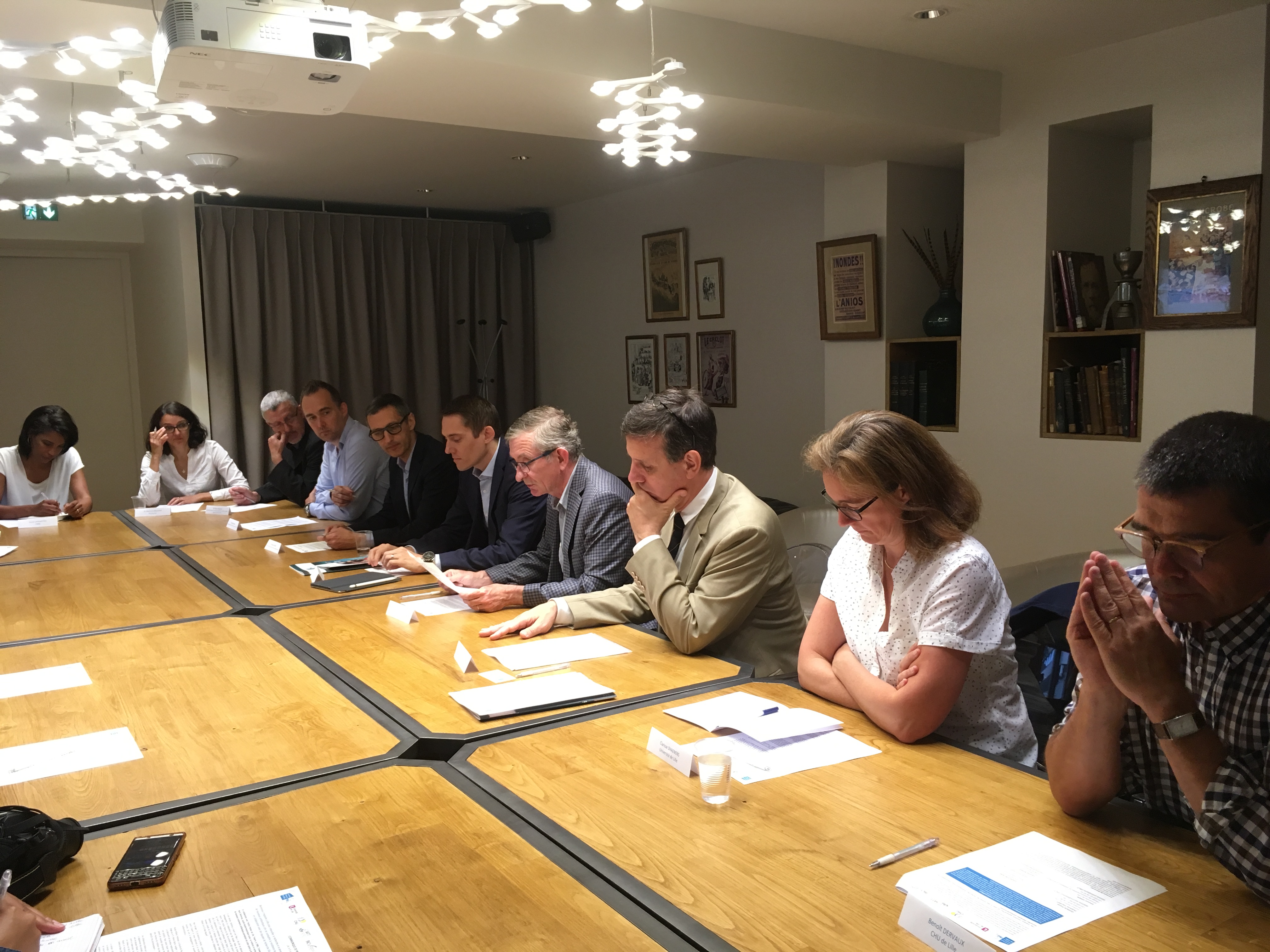
In collaboration with the Pasteur Institute of Lille, Inserm, CNRS, the University of Lille, and SATT Nord, BioVersys, a Swiss biopharmaceutical company, will strengthen research and development into new antibiotic treatments to combat bacterial resistance.
In April last BioVersys has opened a subsidiary in Lille to roll out its research and development activities in collaboration with joint research teams in Lille (University of Lille, Inserm, CNRS, Institut Pasteur de Lille). Its R&D activities will initially be carried out within Unit U1177, headed by Professor Benoit Déprez, at the Faculty of Pharmacy in Lille. This laboratory is entirely dedicated to researching innovative strategies in drug discovery. Bioversys has recruited Dr. Marilyne Bourotte to lead the operational development of new medicinal chemistry projects in collaboration with teams led by Prof. Nicolas Willand and Dr. Alain Baulard.
Marc Gitzinger, CEO of BioVersys, is delighted: "This important step in expanding our activities in Lille, alongside experts in medicinal chemistry and microbiology based there, will enable us to take a new step forward in developing new therapeutic strategies to combat antibiotic resistance."
Nicolas Willand, Professor at the Faculty of Pharmacy in Lille and member of the U1177 unit headed by Prof. Benoit Déprez, emphasizes: "The work of our research unit is primarily dedicated to discovering new drugs that provide solutions to unmet medical needs. We found that our partner BioVersys shares our desire to offer patients new therapeutic alternatives to combat antibiotic resistance. We are therefore delighted to strengthen our ties in the region and are very hopeful that we will achieve our objectives very soon."
A collaboration dedicated to new therapeutic alternatives
The rollout of Bioversys' activities in Lille is the result of a fruitful collaboration that began in 2013 with teams in Lille[4], experts in researching new therapeutic alternatives to combat tuberculosis, whose work led to the discovery of a new antibiotic prototype. This work was recognized in 2016 with the Innovation Award from Universal Biotech, and gained international recognition with the publication of an article in the renowned journal Science in March 2017.
The "SMARt" concept
The "SMARt" concept is based on identifying small molecules that can influence bacterial transcription factors in order to overcome resistance to commonly used antibiotics or reduce the virulence of the pathogen. Proof of concept has been successfully validated with ethionamide, an antibiotic that has been used for over 40 years to treat tuberculosis. Ethionamide has the particularity of being a pro-antibiotic, which means that it must be bioactivated by the bacterium, Mycobacterium tuberculosis, to become active against it. Over the last few decades, the bacterium has evolved to prevent this process. The identification of molecules capable of reactivating alternative bioactivation pathways, which were initially silent, by targeting mycobacterial transcription factors, has made it possible to both increase the sensitivity of wild-type bacteria to ethionamide tenfold and to resensitize initially resistant clinical isolates. The consortium is now working on setting up clinical trials for the selected drug candidate, which are scheduled for 2019.
This work now paves the way for innovative research avenues to develop new antibacterial therapies.